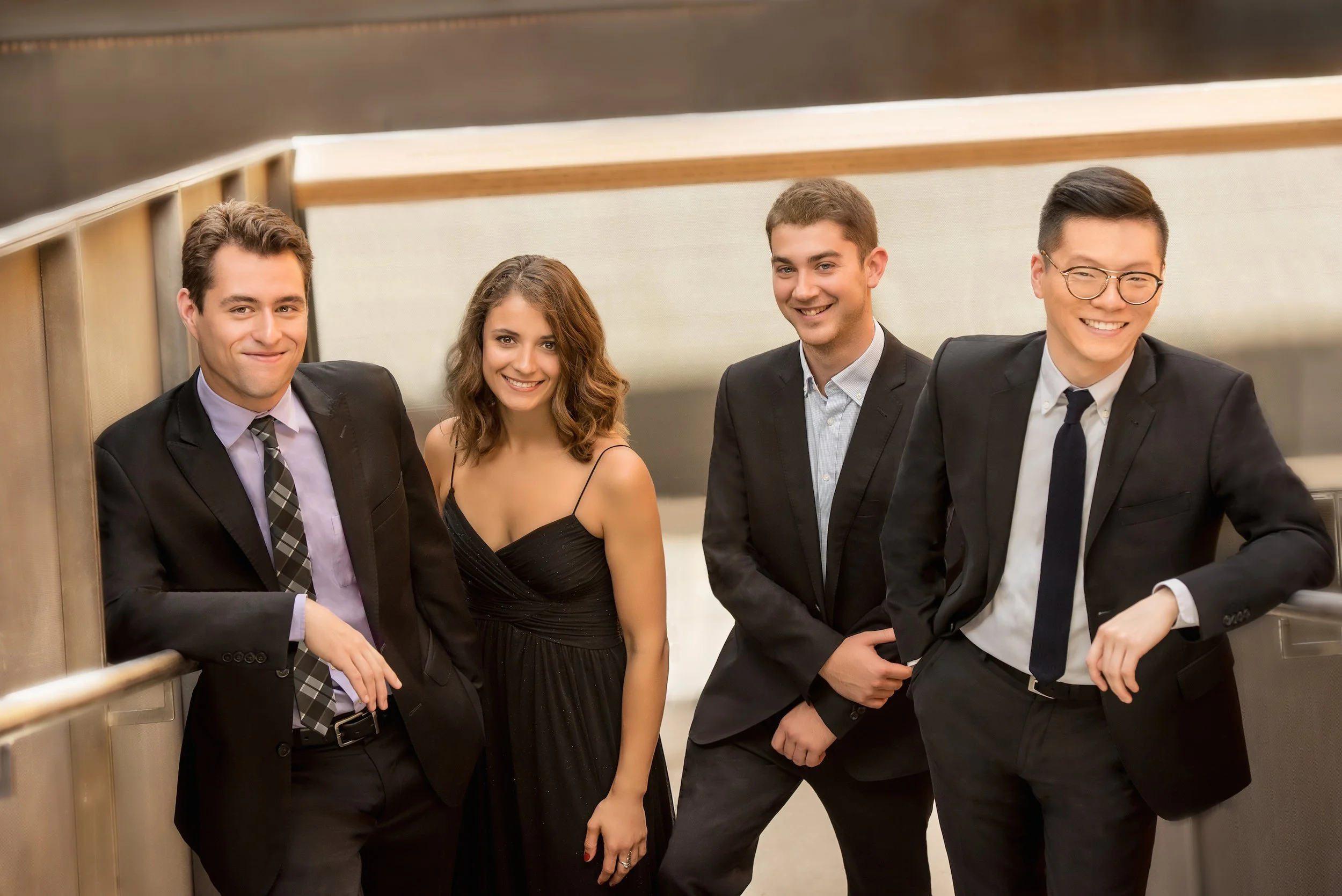
The Curtis Session: Dover Quartet.
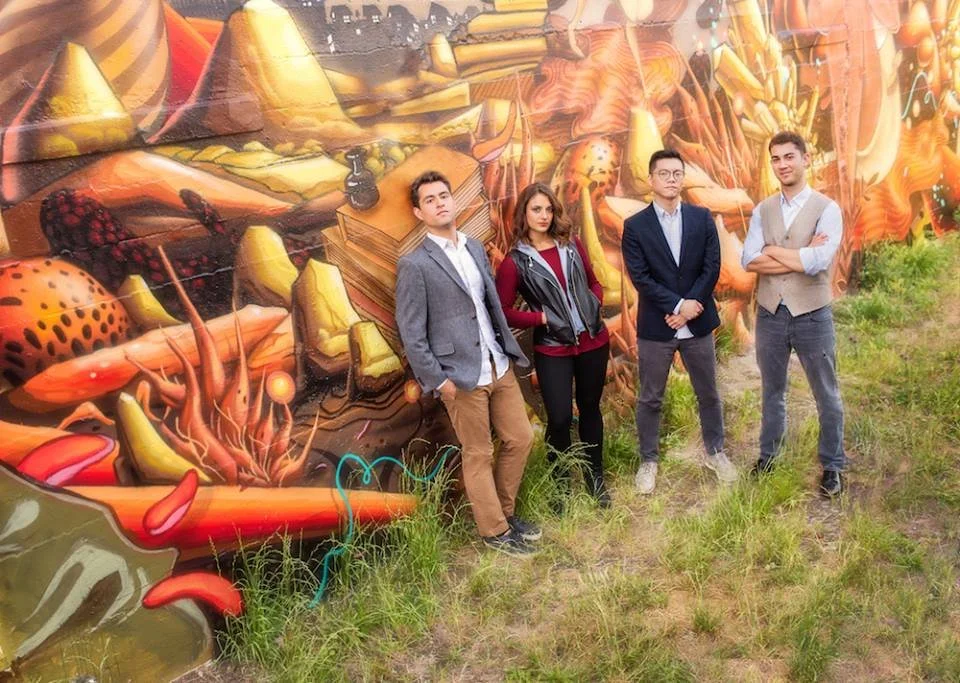
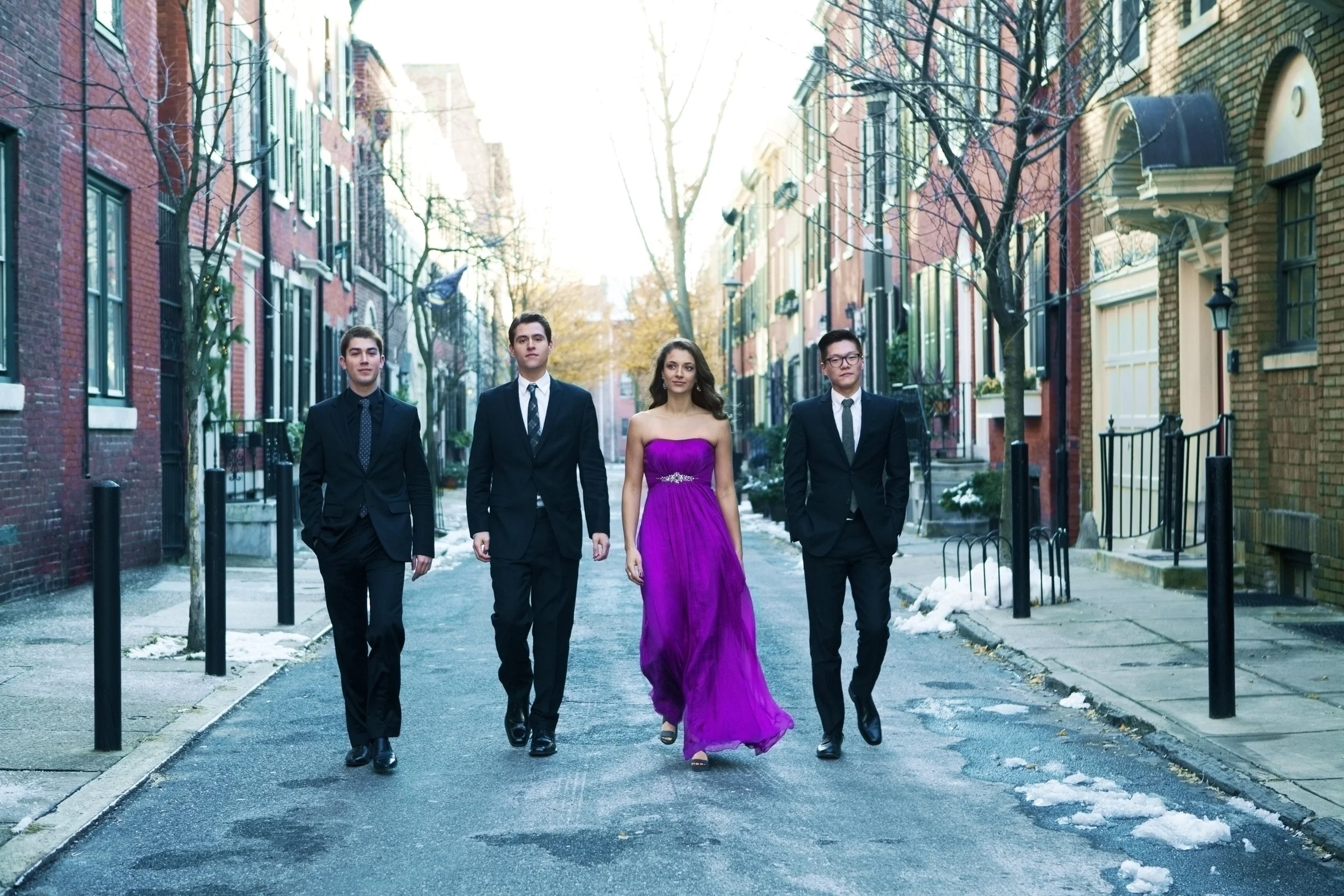
A moment in time… ideally, this is one of the best things that a recording can offer, in this case, a portrait of a young ensemble captured in an unexpected moment of magic. Two mics, four movements, four takes, thirty-one minutes of music with no edits-a stunning glimpse into the brilliant musicianship of the Dover Quartet.
I. Reverberation-Exploration-Flow
The first movement is a dramatic introduction, which foreshadows music that will be heard in the later movements. It does this by juxtaposing “flash-forwards” with ideas that bind the whole together. Among these “glue” devices are ensemble chords built with double-stops and numerous versions of the concept of prolongation of sound or, in other words, held sounds. These include long notes (often tied over the barlines), trills, pulsing chords, and repeated notes of various speeds. The movement ends in a flurry of activity that is intentionally cut-off as the ensemble is in the midst of a triplet pizzicato version of the opening chord. This abrupt ending creates a dramatic suspension that is released with the start of the second movement.
II. Tenderness-Love-Warmth
The second movement is a continuously evolving meditation on lyricism. Melodic modules (or fragments) are passed from instrument to instrument at the start. As the music progresses new and old melodies are combined and juxtaposed, at times in a way similar to cinematic “jump-cuts”. At the end, the melodies are layered in beautiful counterpoint and the music gradually slows to a luminous conclusion.

III. Evolution-Growth-Transformation
The third movement is full of contrasts of musical textures and speeds. In fact, there are three different tempi throughout, as well as, numerous sections that are slightly faster or slower than previous material. The changing pulse rates become a developing feature as music gets reinterpreted either faster or slower than previously heard. In terms of textures, there are broad expansive chords that are inspired by guitar tunings. They shift like a kaleidoscope on themselves and-later on in the movement-“dissolve” as player by player notes change creating new combinations of chords. Alternating with these block sounds are textures that range from fast with rhythmical accents all the way to tranquil quietude. At the end of the movement, the quartet reaches a climax by first ascending to a high E major chord and then descending through a series of breathtaking “dissolves” to reach the final chord with the second violinist playing the bass note on the low open G string.
IV. Determination-Energy-Resolve
The fourth movement has a type of perpetual motion fever with constant interruptions. This driving and energetic finale is built with an ever-present four-note motive, which is inspired by guitar like hammer-ons and pull-offs. Immediately this motive is contrasted by heavily accented notes performed “at the frog” for an almost aggressive sound. As the music progresses, long held note lines get transferred to every instrument in the quartet while the other members of the ensemble continue the relentless motive with tremendous dynamic swells and crescendos. At the end, the music goes even faster and the wild train ride is driven home by the quartet at a frenetically joyous pace.